

Founder Mode at Every Level: 5 Traits That Separate Builders From Bystanders
Leadership isn’t a title—it’s a way of working that anyone can choose.

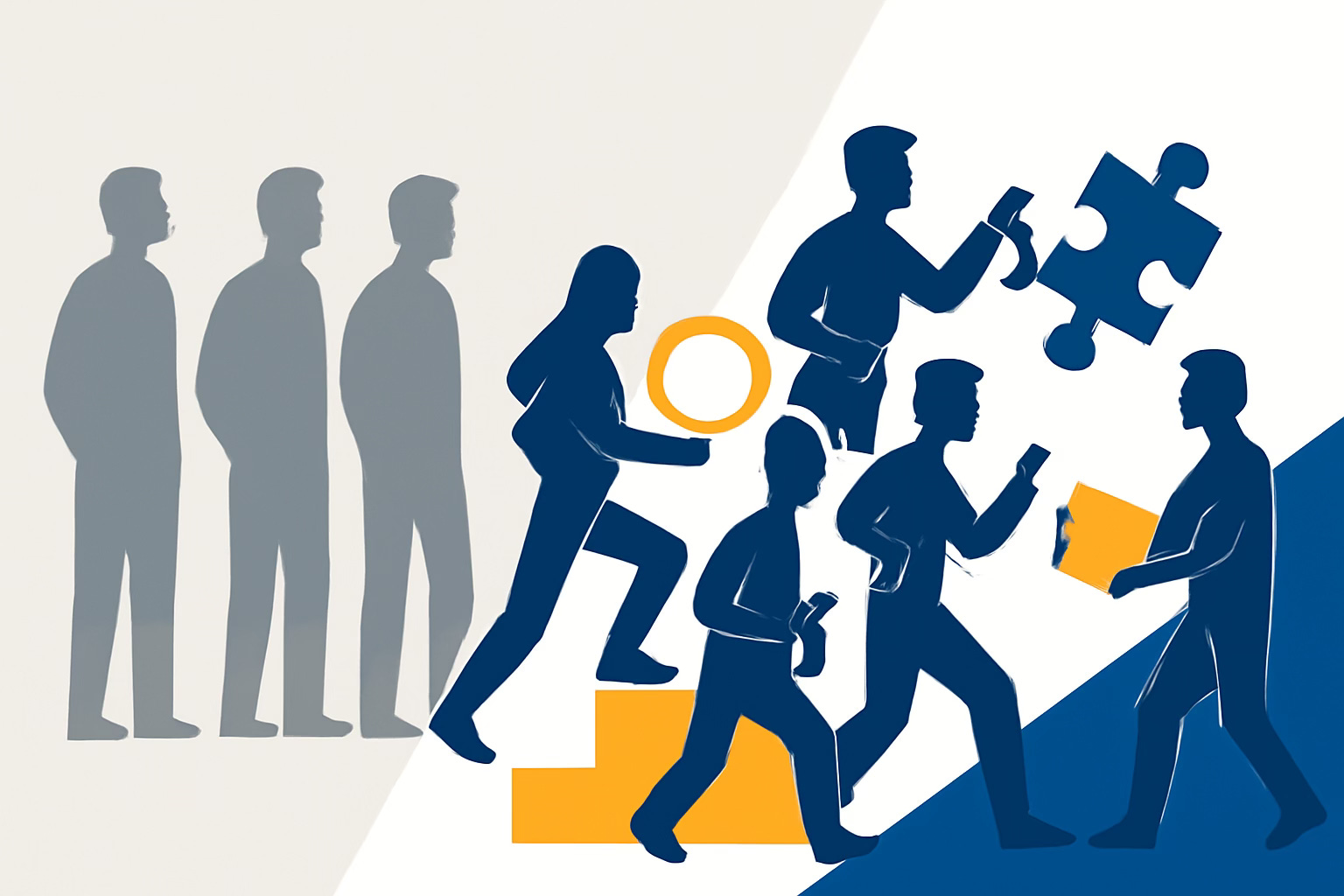
Organizations rise or decay not through grand strategy, but through the small choices people make each day.
One person leaves a task unfinished. Another closes the loop and confirms. One group debates endlessly in a conference room. Another runs an experiment and brings back results. One employee hands off sloppy work, trusting someone else to clean it up. Another ensures what they pass downstream is so clear it accelerates the next handoff.
This is the difference between builders and bystanders.
Paul Graham’s essay on Founder Mode (coined by Paul after Brian Chesky’s talk at YC) went viral because it articulated a truth most people felt but hadn’t named: organizations drift toward bureaucracy. Titles multiply. Layers grow. People retreat into managerial mode—moving bodies instead of managing the work.
But some resist that drift. They act like builders. They move in founder mode, even without the title of founder. Graham noted that great leaders don’t just operate through direct reports; they dive into the work, they stay close to the details, they break the rules of hierarchy when it serves the customer or the craft.
Playing it safe is the riskiest strategy, as it hinders adaptation and growth.
That observation extends far beyond entrepreneurship.
For employees, playing safe—doing only what is assigned, avoiding ownership, waiting for permission—is also the riskiest strategy.
It limits growth, stalls teams, and ensures irrelevance in a fast-changing world.
Rahul Dravid offered a powerful reframing of talent: “Determination, courage, discipline, temperament…these are also talents.”
In business, these overlooked traits matter more than flash.
The employees who show
Discipline in finishing
Courage in experimenting
Temperament in reframing constraints.
Those are the true drivers of progress.
This is what separates builders from bystanders.
Builders don’t need a founder’s title to operate in founder mode.
They choose it in the micro-actions of their day.
Here are the 5 traits that make the difference.
Trait 1: Close the Loop
Founder mode breaks the principle that a CEO should engage with company only via his or her direct reports. That’s another way of saying: don’t let things dangle.
Loops left open create hidden costs—missed clarity, wasted time, eroded trust.
Closing the loop means finishing the task, confirming the outcome, and ensuring the next person knows it’s complete. It’s not glamorous, but it’s the backbone of organizational speed. Every dangling thread becomes organizational debt.
When loops aren’t closed, projects stall invisibly.
Customers wait without answers.
Teams chase what should have been clarified yesterday.
Bystanders leave trails of “almost done.”
Builders move things to done-done.
Closing the loop creates a culture of clarity. It signals reliability. It compounds momentum by reducing friction at every handoff.
Builders close the loop. Bystanders leave it hanging.
Trait 2: Run Small Experiments
Playing it safe is the riskiest strategy, as it hinders adaptation and growth. Endless debate is the illusion of safety. It keeps teams busy while avoiding risk.
Builders collapse speculation into evidence.
They run the test.
They bring back data.
They shift conversations from “what if” to “what happened.”
Small experiments de-risk big bets and shorten the distance between idea and reality.
When teams don’t experiment, they build in theory. They deliver late. They argue endlessly. By the time something ships, the market has already moved on.
Experimentation is not recklessness—it’s disciplined speed. It is the only antidote to stagnation.
Builders experiment. Bystanders debate.
Trait 3: Stack Momentum
Rahul Dravid reframed what real talent means: “Determination, courage, discipline, temperament…these are also talents.”
Momentum stacking is the organizational equivalent of temperament.
Work should not just be finished; it should make the next piece of work easier or more valuable. Builders think in sequences. They ask:
What can I do now that sets up the next person, or the next project, to succeed faster?
When momentum isn’t stacked, teams stay busy but disconnected. Outputs pile up in silos. Progress feels like running in place.
Momentum stacking compounds. It transforms scattered effort into a flywheel. It makes yesterday’s grind the foundation for tomorrow’s acceleration.
Builders stack momentum. Bystanders reset to zero each time.
Trait 4: Reframe Constraints
Kunal Shah calls inefficiency as the largest employer in the world.
Constraints often show up as inefficiencies, walls that stall action.
Bystanders stop at the wall. They escalate, complain, or wait for permission. Builders reframe the problem: What part of this wall can actually move?
Reframing constraints is not blind optimism. It is disciplined creativity. It turns blockers into levers. It shifts attention from what can’t be done to what can.
Teams that don’t reframe get trapped. They stall in bureaucracy. They burn time proving why something won’t work instead of finding what will.
Reframing is a builder’s reflex. It’s how progress continues when the map runs out.
Builders reframe. Bystanders resign.
Trait 5: Own the Downstream
Great writing is not about you—it’s about making sure the reader understands what you mean. The same is true of work.
It’s not finished when you’re done; it’s finished when the next person can start without friction.
Bystanders treat handoffs as exits. Builders treat them as bridges. Owning the downstream means anticipating questions, documenting clearly, testing outputs, and ensuring continuity.
When downstream isn’t owned, friction multiplies. The next person wastes cycles fixing what should have been solved upstream. Progress looks like movement but feels like drag.
When downstream is owned, trust compounds. Teams move as one unit. Each handoff is acceleration, not slowdown.
Builders own the downstream. Bystanders offload and walk away.
Final Thought
High agency is not charisma. It’s not about titles. It’s about daily choices.
Close the loop.
Run small experiments.
Stack momentum.
Reframe constraints.
Own the downstream.
These are the traits that separate builders from bystanders. They are contagious. One builder changes the rhythm of a team. A few teams change the rhythm of an organization.
That’s how companies live in founder mode—not just because of the founder at the top, but because everyone chooses to work like it’s their company too.
Playing it safe is the riskiest strategy. The same holds for employees. Avoiding ownership may feel safe, but it erodes trust, velocity, and relevance.
The opposite is also true. Employees who live these five traits earn trust disproportionate to their title. They rise faster. They shape outcomes. They build legacies.